
- Introducing Open and Reproducible Web Search for the Social Sciences
- Investigating Search: A Hands-on Workshop with the Investigating Search Toolkit
- How Search Engines Speak – a Foucauldian Framework for SERPs as Epistemological Actants
- Conducting Search Data Related Studies with the Result Assessment Tool (RAT)

← All Workshops
Track A
Morning · 09:30–12:45
Investigating Search: A Hands-on Workshop with the Investigating Search Toolkit
Overview
This workshop invites participants to install, test, and contribute to the Investigating Search Interface, a Chrome browser extension developed at the University of Birmingham that overlays research-led prompts onto Google search results and asks users to think critically about search as they search. The 2025 SEASON workshop introduced the project and gathered design feedback through discussion. This session puts the tool into participants' hands. Attendees will run the Interface on their own devices, generate new content for its database and help shape The Investigating Search Companion, the collaboratively authored reference resource that the Interface draws from.
Who should attend
The session welcomes those encountering the project for the first time, as well as returning participants who wish to engage with the latest prototype and contribute to the project's next steps.
What you'll learn
- Participants leave with hands-on experience of a research tool in active development, at a stage when their searches, findings, and contributions will help shape what the tool becomes.
- The session also offers a close encounter with a live design challenge: how academic knowledge about search reaches the people whose searches it describes.
Schedule
09:30–09:45
The project. Why Investigating Search exists and what the prototype is for.
09:45–10:00
How it works. Topic matching, prompt selection and installation in Chrome.
10:00–10:15
Try the interface. Four examples, then a search you are comfortable discussing.
10:15–10:45
Prompt category lab. Compare Mechanism, Activity, Critical question and Things to watch out for. Discuss how prompts should be chosen.
10:45–11:00
Break.
11:00–11:45
Build a table case. Draft two prompts, set a trigger and near miss, and exchange one challenge with another table.
11:45–12:01
Read and report. See the research viewer, read other tables' work and report one decision and one unresolved question.
12:01–12:25
Design discussion. Consider readers, topics, selection rules, sources and evidence still needed.
12:25–12:38
Synthesis. Separate what to retain, revise, investigate or leave unresolved.
12:38–12:45
Close. Return to the opening question and choose what, if anything, to share.
Workshop Materials
Presenter
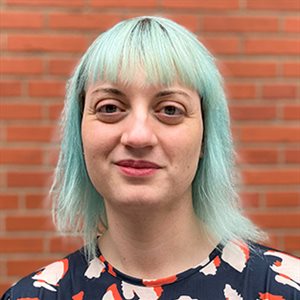
Rosie Graham
University of Birmingham
Rosie Graham is Associate Professor in the Department of English and Co-Director of the Centre for Digital Cultures at the University of Birmingham. Her research focuses on search engines: how to study them, understand their impact on society, and build wider public understanding of the social and ethical issues they generate. She is a primary author of the #FreeWebSearch Charter and has contributed to organisations including the Open Search Foundation. In 2024, she co-founded SEASON: Search Engines and Society Network with Olof Sundin and Dirk Lewandowski. She holds a PhD in English Studies from the University of Exeter.
R.Graham@bham.ac.uk